

Microsoft discontinues Skype: 10 alternatives to replace it
More than two decades after its launch,
Microsoft has confirmed that it will discontinue Skype in May 2025.
The platform—once a pioneer in internet-based voice and video calls—will be officially replaced by Microsoft Teams, closing a significant chapter in the history of digital telecommunications.
Launched in 2003, Skype quickly revolutionized long-distance communication by offering free calls over the internet at a time when landline services dominated the market.
Over time, however, its popularity declined substantially due to the emergence of newer platforms such as Zoom, FaceTime, and Google Meet—dropping from a peak of 150 million active users to approximately 23 million by 2020.
In light of Skype’s retirement, Microsoft has stated that users will still be able to access their accounts using existing credentials via Microsoft Teams. Additionally, chats and contact lists will be automatically migrated to ensure a seamless transition.
Alternatives to Skype.
In the technology sector, the announcement is widely viewed as part of a natural evolution in digital communication habits.
Experts at Acer commented:
”We recognize that digital communication has become a foundational pillar of our interconnected society. Laptops have evolved from simple work tools into central hubs of human connection, enabling face-to-face conversations regardless of distance. The recent news about Skype’s discontinuation reminds us of how communication technology has advanced—from early groundbreaking services to today’s wide range of platforms.”
What Are the Alternatives?
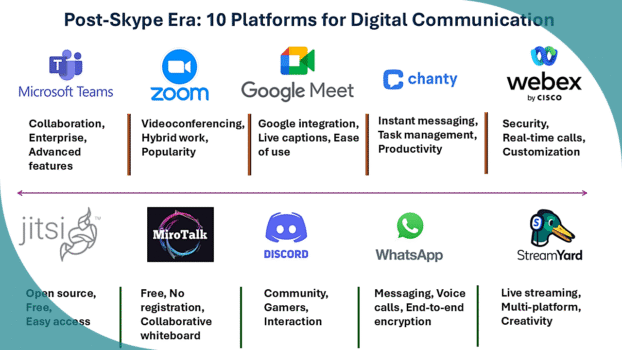
With Skype being phased out, here are ten platforms worth considering to stay connected in 2025:
1. Microsoft Teams – The direct successor to Skype within the Microsoft ecosystem. Teams offers voice and video calling, messaging, file sharing, calendar management, meetings, and communities. It has been widely adopted across homes, businesses, and educational institutions worldwide.
2. Zoom – Founded in 2011, Zoom rose to global prominence during the pandemic. Today, it provides a comprehensive collaboration platform, featuring breakout rooms, digital signage, and integration with email and calendar services. Its enterprise solution, Zoom Workplace, is tailored to support hybrid work environments.
3. Google Meet – Google’s video conferencing tool offers features such as noise reduction, automatic lighting enhancements, and real-time captions. It integrates with Google Workspace and now includes Gemini, an AI-powered assistant for automated meeting notes.
AI-Powered Platforms
4. Chanty – Used by over 75,000 companies worldwide, Chanty is a collaboration platform offering messaging, voice and video calls, file sharing, and task management. Its Teambook and Kanban board features help teams organize projects visually and efficiently.
5. Cisco Webex – A robust enterprise-grade solution that includes real-time calling, screen sharing, meeting recording, remote control, and customizable layouts. Webex supports device switching during calls and provides advanced security measures.
6. Jitsi – An open-source option with over 20 million monthly users. Jitsi Meet enables document sharing, YouTube streaming, password-protected rooms, and additional collaborative tools—all available at no cost.
7. MiroTalk – A browser-based, free communication platform requiring no downloads or registration. It offers calling, messaging, noise suppression, a collaborative whiteboard, integrated ChatGPT, and screen/file sharing.
Communication Platforms.
8. Discord – With more than 200 million users, Discord is especially popular among gamers but is also used across a wide range of online communities. It supports voice and video calls, text chat, and customizable servers across various operating systems and browsers. https://discord.com
9. WhatsApp – Owned by Meta, WhatsApp is one of the most widely used apps in Latin America. It offers messaging, voice and video calls, end-to-end encryption, and business functionality through WhatsApp Business.
10. StreamYard – Designed for content creators, StreamYard enables live streaming to multiple platforms, audience engagement, browser-based recording, and customizable video layouts. It is ideal for podcasts, interviews, and virtual events.

|
|