6 key strategies for protecting your digital security
2 min read
86% of digital security breaches are caused by credential theft. Learn the best practices for protecting your online environment in an increasingly complex risk landscape.
Protecting passwords in an environment where personal and professional activities are primarily conducted online has become a critical priority.
The vulnerability of digital credentials to cybercriminal attacks continues to rise, driven by the widespread use of weak, reused, or easily guessable passwords.
This situation creates an increasingly risky scenario for both users and organizations.
Increase in Sophisticated Attacks.
Experts from BeyondTrust, a firm specializing in identity and privileged access protection, warn about the growing sophistication of attacks aimed at stealing or decrypting passwords.
The well-known password cracking method uses advanced tools that allow access to systems via brute force, dictionaries, or even artificial intelligence.
Other common methods include malware, phishing, and large-scale data breaches.
The data highlights the magnitude of the problem. According to Google Cloud’s Threat Horizons Report 2023, 86% of security breaches are related to the use of stolen credentials.
Meanwhile, the IBM X-Force Threat Intelligence Index 2024 reported a 71% increase in attacks using valid credentials, highlighting a shift in the attackers’ strategy, now focused on identity theft.
The threat intensifies when attackers gain access to privileged accounts, as this allows them to move within the system and bypass additional controls.
Mateo Díaz, Sales Manager at BeyondTrust for Latin America, states:
“Compromised passwords are the gateway for attackers. Protecting privileged credentials is not just a good practice, it’s a strategic necessity.”
Currently, the distinction between regular and privileged accounts is becoming increasingly blurred. The adoption of SaaS applications, hybrid infrastructures, and cloud services has made it so that any digital identity can escalate privileges, even if it doesn’t appear to have them.
The Role of Social Engineering.
Many attacks do not require advanced technical skills but instead exploit trust and emotion.
Through social engineering techniques, cybercriminals deceive individuals into voluntarily providing their data.
Emails from well-known stores, fake calls from banks, or urgent verification messages are some common examples.
It is advised to be suspicious of any unexpected message requesting personal information. Do not share passwords via email or phone and avoid clicking on suspicious links.
The safest option is to visit the official website directly by typing the address into your browser.
6 Keys to Keeping Your Passwords Secure.
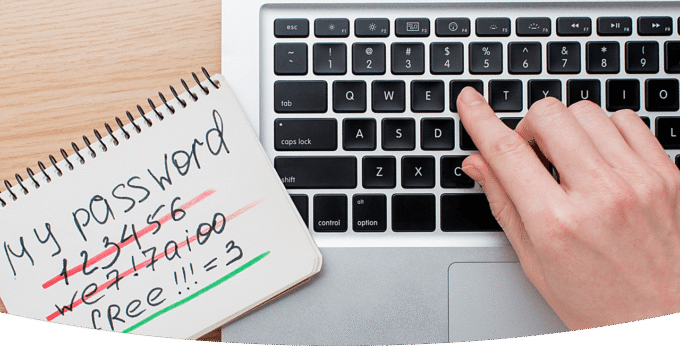
Never write passwords on paper or in spreadsheets.
Do not use the same password across multiple sites and update them regularly.
Using password managers can help create unique and complex passwords.
Regularly update passwords, especially if you suspect a breach or data leak.
Enabling multifactor authentication (MFA) adds an extra layer of protection that can make a difference.
Use a password manager to store and manage your passwords.
Mateo Díaz recommends:
“The first step towards good cybersecurity is awareness. Technology is vital, but user education is the true first line of defense.”
Digital protection has become a necessity. While there is no infallible defense, adopting responsible password management practices is a fundamental step in preventing attacks and protecting both personal information and an organization’s most critical assets.