

The 8 best AI chatbots to use in 2025
Discover the 8 best AI chatbots for 2025. According to Acer, one of them can process up to 1,100 words per second and respond in just 1.3 seconds.
Artificial intelligence chatbots have established
themselves as key tools in the interaction between humans and technology. These programs, designed to simulate human conversation, have evolved from basic automated response systems into sophisticated assistants powered by artificial intelligence and machine learning, capable of executing complex tasks and offering realistic conversational experiences.Modern chatbots simulate human interaction using natural language processing (NLP) to engage with users.
Thanks to this, users can feel as though they are conversing with another person, ask questions about life or business, or receive assistance in planning their vacations.
These chatbots are capable of remembering previous interactions and generating new responses within context, delivering an almost human-like conversational experience.
”Advancements in artificial intelligence have revolutionized the way we interact with technology. At Acer, we believe AI-powered chatbots will not only boost productivity but also redefine the user experience in the coming years” .
says Silvio García, Regional Director at Acer for Colombia and Mexico.
Performance and Personalization.
Below is a list of the best AI chatbots to use in 2025.
1. Le Chat
Developed by French startup Mistral AI, Le Chat is a conversational assistant that provides information on a wide range of topics, from cooking to programming. It can process up to 1,100 words per second and complete coding tasks in just 1.3 seconds, outperforming many of its competitors. Users can customize the chatbot’s interface and enjoy natural conversations enriched by AI-powered searches, task planning, and collaborative ideation.
2. ChatGPT
Developed by OpenAI, ChatGPT uses natural language processing to simulate realistic interactions with users. It is trained to ask follow-up questions, admit mistakes, reject inappropriate requests, and recall information from previous conversations.
It is useful for brainstorming, gathering information, and carrying out tasks such as shopping lists, travel plans, or business ideas. Additionally, it can analyze images and data, generate visuals, and maintain text or voice-based conversations on nearly any topic.
3. Perplexity
This free AI search engine scours the internet to deliver conversational responses.
It allows users to quickly access information from media outlets, academic articles, and blogs, while providing sources and citations for reference.
Perplexity assists in answering everyday questions, finding information for professional projects, or exploring and deepening knowledge in new areas. It is user-friendly and distills complex information into clear, coherent answers.
4. Grok
Developed by xAI, Elon Musk’s company, Grok is a chatbot trained to respond in a direct and often humorous manner, offering a more casual alternative to other chatbots.
It can generate images, excelling in photorealistic rendering from text instructions. Additionally, it can assist in writing stories, solving equations, or programming, and is available via web or on Android and iOS devices.
5. Gemini
Provides direct access to Google AI and can assist with writing, planning, and learning tasks. It responds to requests using either its existing knowledge or information retrieved from sources such as Google.
While its ability to recall information from previous conversations is currently limited—meaning it cannot maintain context over extended interactions—it is continually improving.
6. Copilot
This AI companion leverages advanced artificial intelligence to understand questions and requests. In addition to engaging in conversations and conducting research, Copilot provides direct answers, suggestions, and feedback to a variety of inquiries.
Users are encouraged to interact with Copilot using natural language, as if speaking with a friend, which helps the chatbot learn preferences and deliver information in a more familiar way.
7. Claude:
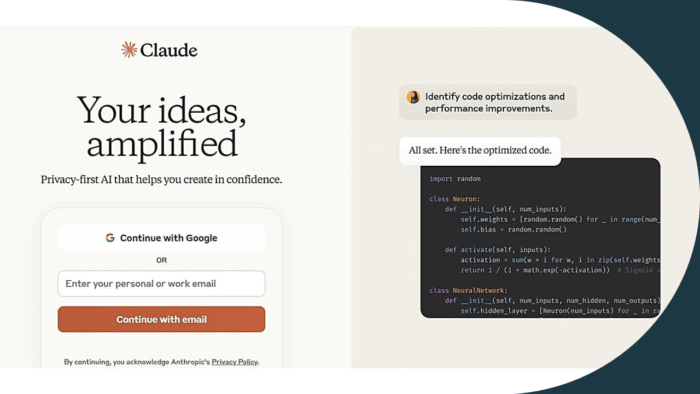
Claude is a next-generation AI assistant designed to be both safe and accurate. Developed by Anthropic, Claude helps users process large volumes of complex information, generate ideas, write code, and optimize concepts.
Claude uses Constitutional AI—an approach that aims to prevent harmful or toxic responses, focusing on building an honest and helpful AI system. It follows a set of guiding principles—like a constitution—that reinforce transparency in its responses.
8. Meta AI
Meta AI is an artificial intelligence chatbot that answers questions, generates images, and helps users learn new things.
It is available through Meta’s applications, including Facebook, Instagram, Messenger, and WhatsApp.
This chatbot is capable of complex reasoning and acts as a real-time conversational companion while users are on the go.
Furthermore, it allows users to select familiar voices to discuss topics or narrate stories, adding a personalized touch to the experience.
These chatbots represent the latest in artificial intelligence technology and offer a variety of features to enhance productivity and improve access to information in 2025.

|
|