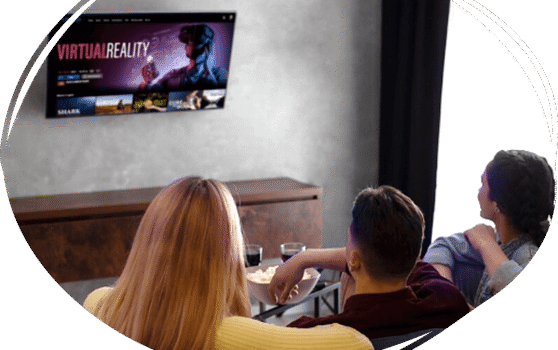
For many, clearly following dialogues in movies or TV shows has become a challenge. This is not only due to poor audio mixing or diverse accents, but also factors like the acoustics of the environment or hearing loss. Increasing the volume is not always enough, and resorting to subtitles can distract from the visual experience.
In response to this issue, Sonos introduced an updated version of its Voice Enhancement feature, offering four adjustable levels designed to improve dialogue clarity.
One of these levels was specifically developed for people with hearing loss. This AI-powered feature is now available through a free update for the Sonos Arc Ultra soundbar.
Collaboration with Experts.
With the goal of creating a solution that addressed the real needs of those who have difficulty hearing dialogues, the company collaborated with the Royal National Institute for Deaf People (RNID).
The collaboration involved 37 participants of varying ages and hearing abilities, who tested the feature across a range of content for nearly a year.
Matt Benatan, Principal Research Scientist at Sonos, explains:
“It’s not just practical, it’s emotional. One of the most important aspects of watching TV shows, series, or movies is the opportunity to connect through real-time cultural and entertainment events. If a viewer cannot fully hear the dialogue, they lose the ability to enjoy and engage in the moment.”
Sonos engineers used machine learning to separate dialogue from other sounds, achieving greater clarity without compromising the overall sound experience. Harry Jones, Sound Experience Engineer at Sonos, provides further details:
“This allows us to extract just the dialogue at the most crucial moments, without overly affecting the volume or detracting from the overall cinematic experience.”
Levels Tailored to Each Need.
The Voice Enhancement feature can be activated from the Sonos app home screen and offers four intensity levels:
Low: A subtle enhancement that maintains the original intent of the content.
• Medium: Provides greater clarity without significantly altering the sound mix.
• High: Highlights the dialogue more prominently, reducing other audio elements.
• Max: Specifically designed for people with hearing loss, prioritizing dialogue clarity over other sound content.
Unlike the more balanced levels, the Max level controls the dynamic range of non-vocal sounds, placing the dialogue at the forefront.
At-Home Experience.
User perspectives were central to the design of this feature. Lauren Ward, Lead Researcher at RNID, states:
“We wanted to ensure that the voice enhancement worked for everyone, even for those who may not even realize they have hearing loss.”
She added that one in three adults in the UK and nearly one in four in the US suffer from some degree of hearing loss.
To perfect the system, the brand also collaborated with Chris Jenkins, renowned sound mixing engineer for film. His involvement helped translate professional voice extraction techniques into the home environment while maintaining the fidelity of effects and music. Jenkins asserts:
“Sonos’ new Voice Enhancement feature is a significant step forward in addressing the challenges posed by dialogue in the vast range of content available today. It also highlights the importance of maintaining the human touch when creating with AI: we’ve dedicated countless hours to listening sessions, working on every detail.”
Benatan added that from the outset of the project, it was clear that the focus should be on people with hearing loss. He explains:
“What we learned from the RNID researchers and participants perfectly complemented the input from Chris Jenkins, allowing us to consider a broader range of listener perspectives.”