
This is the crossroads for Data Centers in the digital age
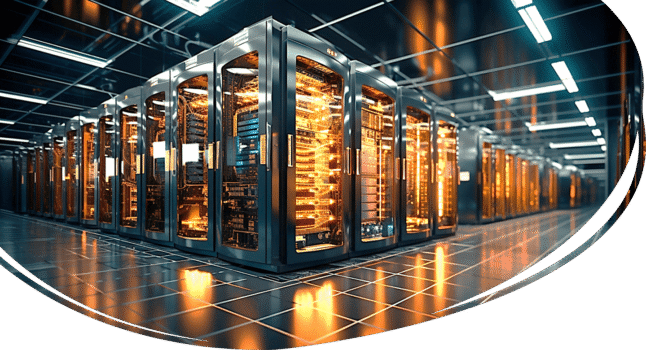
Data centers, essential for storing and processing information in the digital age, find themselves at a crossroads due to escalating challenges in environmental sustainability, security, and energy efficiency.
This is highlighted in a report by Thematics Asset Management, which warns that the rapid expansion of these facilities—driven by artificial intelligence (AI) and the Internet of Things (IoT)—demands urgent responses.
Growth and Global Reach.
The sector’s market value reached $219.23 billion in 2023 and is projected to grow to $584.86 billion by 2032, with an annual growth rate of 11.6%.
This trend underscores the critical dependence of digital society on this infrastructure.
The United States leads with 5,381 operational data centers—nearly one-third of the global total—followed by Germany (521) and the United Kingdom (514).
Analysts estimate that this sector could contribute between 30 and 70 cumulative years of growth to the U.S. GDP from 2005 to 2025.
Concerning Environmental Impact.
However, the natural resource consumption associated with these data centers is alarming.
In the U.S. alone, over 283 billion liters of water were used in 2023—equivalent to the annual consumption of a city like London.
The rise of AI has intensified this demand: Microsoft increased its water usage by 34% between 2021 and 2022, while Google used 16.3 billion liters solely for cooling in 2022.
Regarding electricity, global data center consumption was estimated between 240 and 340 terawatt-hours in 2022—accounting for 1% to 1.3% of worldwide demand—and this figure is expected to multiply by 2.6 by 2030.
To address these challenges, the industry is advancing technologies such as liquid cooling, which reduces water use but raises concerns due to the use of chemicals like PFAS.
Other strategies include closed-loop systems and wastewater reuse, such as seawater and greywater.
Nonetheless, these innovations often require more energy, creating a complex cycle that demands comprehensive solutions.
Security and Technological Advances.
In terms of security, data centers face increasing threats.
They are targets of sophisticated cyberattacks from nation-states (Russia and China), criminal groups, and activists using ransomware and DDoS attacks.
Additionally, the theft of expensive equipment—such as NVIDIA chips costing up to $100,000 per unit—and incidents like the 2020 fire at a Strasbourg data center highlight their physical vulnerabilities.
In response, companies are deploying biometric systems, thermal surveillance, and waterless fire suppression mechanisms.
Artificial intelligence is transforming the sector.
Tools such as DeepMind from Alphabet optimize energy consumption by up to 40%.
However, generative AI requires more powerful infrastructure, with cabinets consuming between 100 and 120 kWh compared to the traditional 30 kWh, as well as liquid cooling systems.
The demand for low latency is also reshaping data center locations, prioritizing proximity to users despite higher energy costs.
Data centers must balance their vital role in the digital economy with the urgent need to improve sustainability, security, and efficiency.
The development of technologies in water management, clean energy, and comprehensive protection will be key to their future.
For journalists and analysts, the sector offers multiple angles—from its economic and geopolitical impact to the technological advances it drives.

|
|