
Is your favorite influencer real or AI? discover the truth
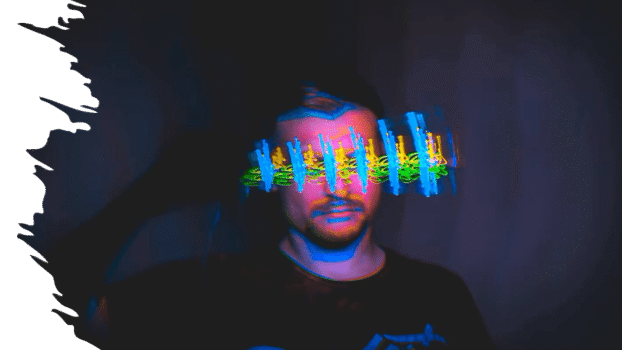
The influencer marketing industry is undergoing a profound transformation thanks to the emergence of AI-powered digital creators, such as virtual influencers, digital twins, and AI creators.
This new generation is reshaping how brands connect with their audiences, opening an innovative landscape in content creation.
The Future of Marketing.
In an exclusive talk held in Bogotá, Ted Murphy, regarded as one of the pioneers of influencer marketing and founder of IZEA, explained how AI-generated content is shaping the sector’s future.
Murphy, who has also led experiments with AI-managed YouTube channels achieving subscriber growth of up to 337%, stated:
“We are at a pivotal moment to rethink creativity, reach, and authenticity in digital communication. Digital twins allow a real person to collaborate with a virtual version of themselves, generating high-quality content at scale, without the physical limitations of time or location.”
Murphy recalled that just two decades ago, digital marketing paid $7 for a blog post, whereas today investments in globally impactful posts reach millions.

In this new era, collaboration between influencers, marketers, and AI is redefining content creation and sponsorships.
There are two sponsorship models: traditional and generative.
In traditional sponsorships, brands send physical products to influencers or influencers purchase them to create content.
This type of content requires travel, filming on real locations, use of cameras and physical equipment, as well as editing that may involve multiple takes to achieve the desired result.
Traditional vs. Generative Sponsorships.
On the other hand, generative sponsorships use images and scenarios created by digital models or AI environments.
Creators can place themselves in real or imaginary spaces without the need for physical travel.
Instead of cameras, they use software to manipulate or create reality, producing content variations quickly and without reshooting.
In this model, the product is not physically present but exists in a reality fused with AI.
From an economic perspective, generative sponsorships are more cost-effective by removing many logistical barriers, but their main advantage is creative freedom.
While creativity in traditional sponsorships is constrained by physical laws, generative sponsorships dissolve these rules, enabling content creation anywhere and exploring previously unimaginable possibilities.
These generative sponsorships are linked to three types of digital creators who are redefining content creation:
– Virtual influencers: digitally created personalities with no physical existence but real followers and active social media accounts, such as @lilmiquela.
– Digital twins: real people who have developed a digital version of themselves, enabling hybrid collaborations between real and virtual selves.
– AI creators: individuals or teams using artificial intelligence to generate content, often without showing human identity or visible faces.
FLUVIP and Innovation.
In this context, FLUVIP, a leading influencer marketing platform in Latin America, stands out as a pioneer in integrating AI technologies in the region.
Their technology analyzes millions of profiles and predicts campaign performance, while incorporating tools for avatars, AI-generated product renders, and scenarios, thereby expanding creative possibilities for brands and creators.
As Sebastián Jasminoy, CEO and founder of FLUVIP, describes:
“The future of content is hybrid: people and artificial intelligence working together to achieve better results. Our vision is to promote principles of transparency, relevance, and effectiveness.”
According to IAB data, influencer marketing in Colombia grew by 78% and now exceeds 650,000 creators.
In this new landscape, brands that swiftly adopt these technologies will not only reduce costs but also gain relevance in an environment where audience attention is increasingly scarce.

|
|


