

Higher AI rack density puts data center cooling to the test
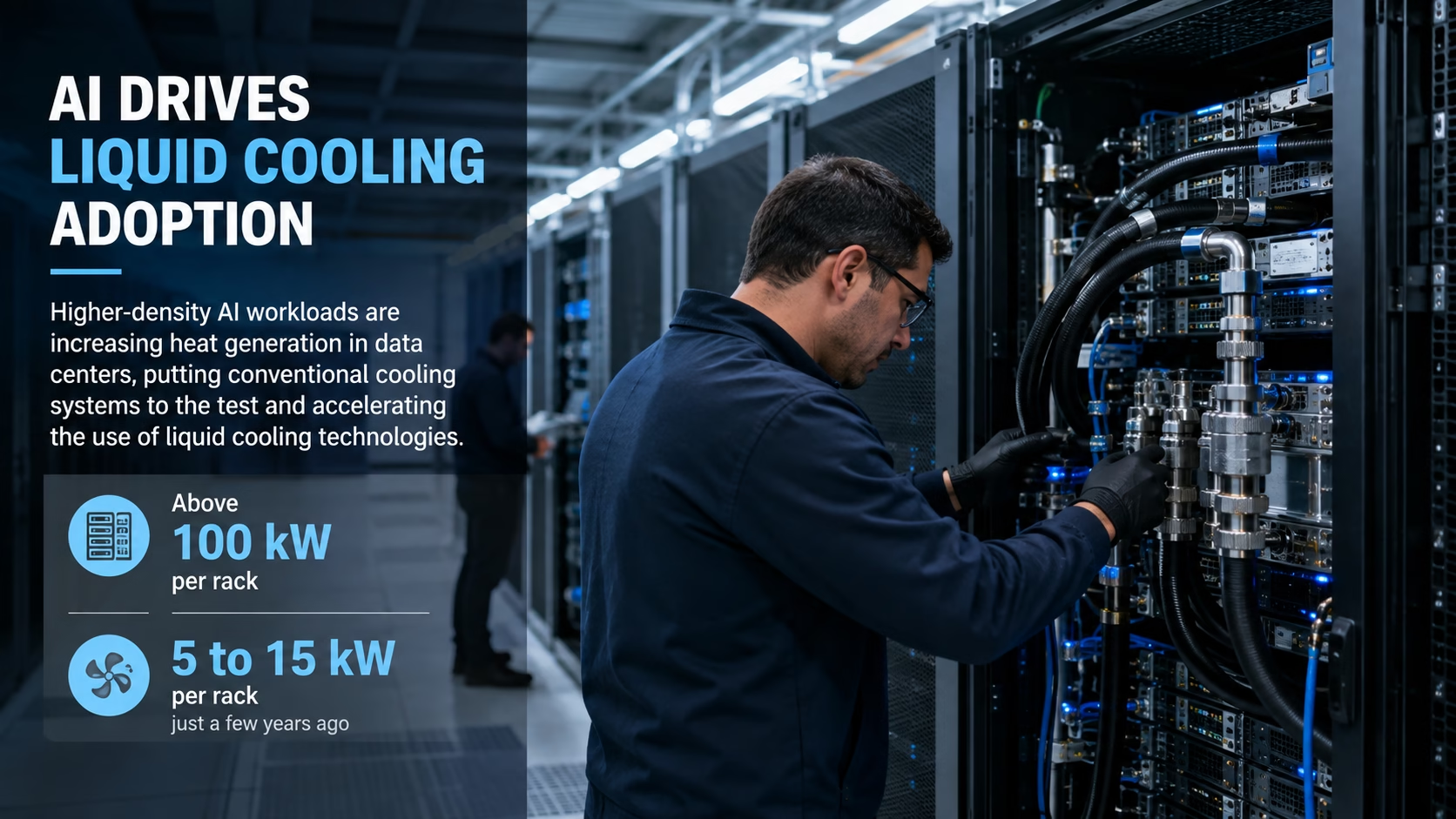
The increase in computational density for artificial intelligence is raising the thermal demands of data centers, where racks are reaching unprecedented levels.
Liquid cooling is gaining ground as AI-dedicated infrastructures require greater capacity to manage the heat generated by high-performance GPUs.
Racks dedicated to new artificial intelligence applications are reaching densities above 100 kW, compared with the 5 to 15 kW levels that were common just a few years ago, according to an article by Data Centers (2026).
The increase in processing capacity is also raising heat generation inside data centers and putting conventional cooling systems to the test.
The expansion of AI workloads is driving the adoption of liquid cooling to address the greater thermal demands of these facilities.
Unlike systems based exclusively on air, this technology makes it possible to extract heat more efficiently and directly from components such as GPUs used in artificial intelligence applications.
AI Factories raise thermal demands.
The shift coincides with the emergence of so-called AI Factories, infrastructures designed to train, deploy, and operate advanced artificial intelligence models at scale.
Many use high-performance GPU-based platforms, such as those developed by NVIDIA, which require greater power and thermal capacities than traditional environments.
“Artificial intelligence workloads are driving power density per rack to levels that far exceed the capabilities of traditional cooling systems. Liquid cooling enables more efficient and direct heat removal, ensuring the performance, reliability, and operational continuity of data centers,” says Paula Pinto, Cooling Leader for South America at Schneider Electric.
The increase in computational density is turning thermal management into a strategic factor for maintaining the energy efficiency, availability, and sustainability of digital infrastructure, while also avoiding operational constraints resulting from excess heat.
Data centers move toward hybrid systems.
Industry analyses cited in the material anticipate that future data centers will combine air cooling and liquid technologies to address higher computational-density environments and take advantage of the characteristics of both systems.
“The data centers of the future will be hybrid, combining air cooling and liquid cooling to support increasingly demanding AI applications. The challenge will be to balance energy efficiency, processing capacity, and sustainability while maintaining the operational resilience required by organizations,” says Pinto.
For Colombia and Latin America, the transformation presents an opportunity to modernize technology infrastructure and adopt more efficient technologies to manage energy and temperature.
These changes would make it possible to respond to growing processing needs, enable the development of new AI Factories, and attract new investment in high-density data centers.

|
|