For the third consecutive year, LINKS 2025 established itself as a key forum for analyzing the world’s most disruptive technological developments. Organized by Liberty Networks, the event brought together leaders from the telecommunications and business sectors across Latin America.
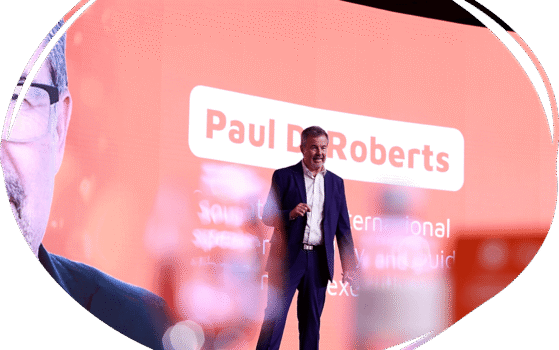
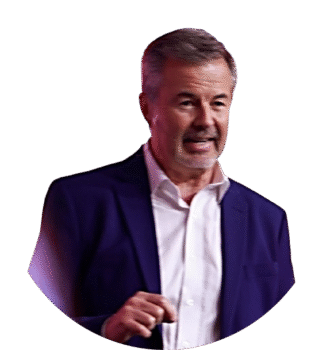
Futurist and innovation expert Paul D. Roberts delivered a keynote on technological acceleration and the urgent need for infrastructure designed to meet the demands of an increasingly connected and automated world.
Acceleration and the Technological Future.
Roberts emphasized that:
“We are living in the slowest times we will ever experience again. Change is exponential and it’s not going to slow down—even though we’re currently in comparatively less complex times. Businesses need technology infrastructure that is not only adapted to today’s needs but also engineered for an unpredictable future.”
According to Roberts, the coming decade will be defined by unprecedented growth in computing power, driven by next-generation chips, breakthroughs in artificial intelligence, and the expansion of automated systems.
In this scenario, fiber optics and 5G networks will form the backbone of essential sectors such as healthcare, agriculture, manufacturing, and education. As he noted:
“The real revolution lies not only in smart devices, but in the capacity of our networks to support the distributed intelligence of the future—sensors, data, edge computing, AI—all operating simultaneously. And that requires robust infrastructure.”
In Latin America, the challenges are even more acute due to surging demand for connectivity, compounded by structural issues such as geographic fragmentation, digital divides, and the need for greater energy efficiency in data centers.
Energy Consumption and Sustainability.
One of the key issues raised during Roberts’ presentation was the growing energy consumption of data centers. According to his projections: “Data centers could consume up to 9% of global electricity by 2030, up from 3% today.”
Paul D. Roberts
This looming challenge is pushing companies to seek innovative solutions—from improved cooling systems to radical experiments like space-based data centers.
As demand for computing power continues to rise, the need for smarter, more efficient, and sustainable networks becomes increasingly urgent.
The combined deployment of fiber optics and 5G is not only meeting current demands but is also laying the groundwork for a resilient digital ecosystem.